
How technology rewires the brain and fragments our ability to focus.
Introduction
Something strange is happening to our minds. We can’t seem to focus. We scroll without thinking, skim instead of read, and fill silence with noise. Many people assume they’ve developed ADHD — but a growing number of researchers suggest something different: we’re not sick; we’re overstimulated.
The modern brain is swimming in a sea of digital input that it was never designed to process. And the result is a generation that’s increasingly anxious, distracted, and disconnected — not only from others, but from God Himself.
In this first post of the Faith & Focus series, we’ll explore what’s happening to our attention, how technology reshapes the brain, and why Scripture’s ancient wisdom offers the only lasting remedy. I will be going deeper into the following topics as we continue in this series. But for now, let me give you a quick overview.
The Digital Fog: Why Our Minds Feel Fragmented
If you’ve ever sat down to pray or read your Bible, only to check your phone “just for a second,” you already know the power of distraction. What used to be quiet moments of reflection are now filled with microbursts of entertainment — endless pings, alerts, and dopamine spikes.
Neuroscientists have found that this constant novelty is not harmless. It actually reshapes the brain. Researchers at the University of California–San Diego discovered that media multitasking reduces gray matter density in the anterior cingulate cortex — the region that regulates focus, decision-making, and empathy.¹ In simple terms, the more we switch between apps, the less capacity we have for deep, sustained thought.
The Bible speaks to this long before MRI machines did: “Be still, and know that I am God” (Psalm 46:10). Stillness is not just a spiritual practice; it’s a neurological necessity. Each time we quiet the noise, we retrain the mind to rest in the reality of God instead of the rush of the feed.
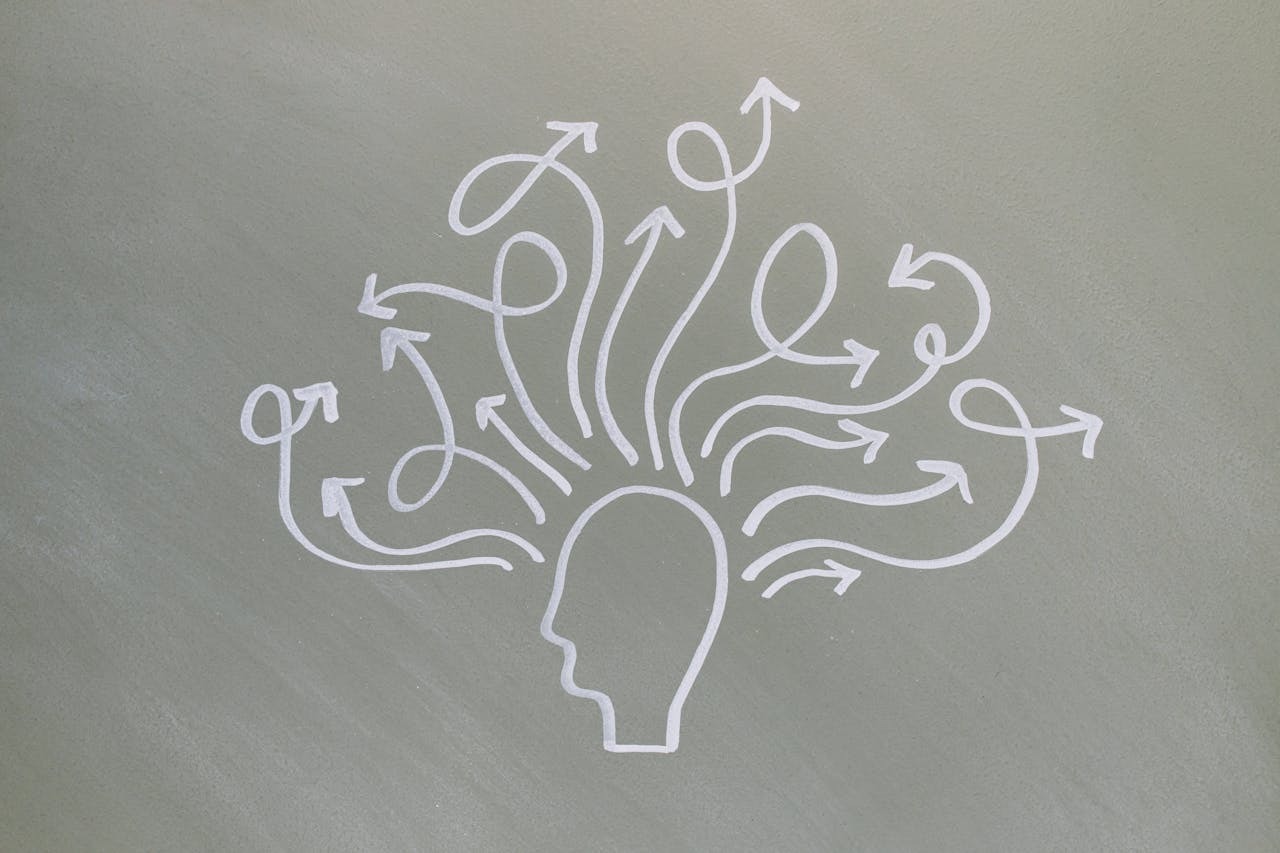
Tech-Induced ADD: The Myth and the Misdiagnosis
Attention Deficit Disorder and ADHD are real, legitimate conditions — but they are also being overdiagnosed in a distracted world. A landmark 2018 JAMA study followed nearly 2,600 teenagers for two years and found that heavy digital media users were twice as likely to develop ADHD-like symptoms.²
Why? Because constant stimulation rewires the brain’s reward system. Every notification, new post, or video gives a tiny surge of dopamine — the neurotransmitter that tells us something exciting is happening. Over time, the brain becomes desensitized, needing stronger and more frequent stimuli to feel the same pleasure. Boredom begins to feel unbearable. The ability to focus on anything slow or quiet — like Scripture, conversation, or prayer — starts to vanish.
Spiritually, it mirrors Paul’s warning in 2 Timothy 4:3: “People will not endure sound teaching, but having itching ears they will accumulate for themselves teachers to suit their passions.” The restless, overstimulated mind finds stillness intolerable. The enemy of spiritual growth is not ignorance; it’s distraction.
The Selfie Generation: When Validation Replaces Identity
Technology has not only fragmented our focus — it’s reshaped how we see ourselves. The “selfie” era has produced an entire generation measuring self-worth by metrics: likes, followers, shares, and comments. What began as creative self-expression has quietly become a system of comparison, pressure, and insecurity.
Psychologist Jean Twenge and her colleagues have shown that the more time adolescents spend on social media, the greater their risk of depression and self-harm.³ This is especially true when identity becomes tied to online validation. The endless pursuit of approval creates emotional whiplash: one moment of viral success followed by hours of anxious self-scrutiny.
Jesus warned about this pattern long before Instagram existed: “Beware of practicing your righteousness before others to be seen by them” (Matthew 6:1). The temptation to live for the eyes of others is ancient — we’ve just digitized it. Social media promises connection but often delivers comparison. The gospel, by contrast, offers identity that cannot be liked or unliked.

Rewiring the Brain: What Science Reveals
Our brains are marvels of plasticity — constantly adapting to whatever they consume most. But that plasticity can work against us. In children, high screen exposure has been linked to reduced white matter integrity, which affects learning, memory, and self-regulation.⁴ Adults are not immune. Studies show that video games, especially fast-paced or reward-based ones like Fortnite and Minecraft, increase activity in the amygdala — the brain’s emotional alarm center — while reducing function in the prefrontal cortex, which governs self-control.⁵
This imbalance can lead to irritability, emotional volatility, and difficulty regulating impulses. Essentially, our brains become wired for reaction, not reflection.
Romans 12:2 says, “Do not be conformed to this world, but be transformed by the renewing of your mind.” The more we fix our attention on fast-changing stimuli, the more conformed we become to chaos. Renewal begins when we direct our attention to what is constant — the presence and Word of God.
The Cost of Constant Stimulation
Every ping, vibration, and flashing notification activates the brain’s stress response. When these alerts are constant, cortisol — the stress hormone — remains elevated, leading to fatigue, anxiety, and even mild depression. Psychologists call it “the dopamine deficit state”: overstimulated yet under-satisfied.
Proverbs 27:20 offers a timeless diagnosis: “Death and Destruction are never satisfied, and neither are the eyes of man.”The digital scroll never ends because the craving never ends. Modern algorithms are designed to exploit this — to keep our eyes on screens, not on the Savior.
The result is a subtle but profound drift of the soul. Instead of attending to God, we attend to everything else. Instead of contemplation, we live in reaction. Instead of abiding in peace, we drown in noise.
A Theology of Attention
Attention is the currency of the soul. Whatever we attend to shapes what we love, and what we love shapes who we become. The apostle Paul captures this beautifully: “We all, with unveiled face, beholding the glory of the Lord, are being transformed into the same image” (2 Corinthians 3:18).
If transformation begins with beholding, then our spiritual formation depends on our ability to look steadily at the right thing. Technology, by design, fragments that gaze. It divides our attention into a thousand micro-glances — each too brief to behold anything truly beautiful.
To follow Jesus in a distracted world is to reclaim our focus as an act of worship. Hebrews 12:2 calls us to fix our eyes on Him. That word “fix” implies effort, choice, and intention. It means we don’t drift into holiness; we direct ourselves toward it. The battle for holiness begins with the battle for attention.
Practicing Digital Sabbath
If our attention has been trained into chaos, it must be retrained into calm. God’s solution predates the iPhone: Sabbath.
Sabbath is not just a religious observance — it’s a neurological necessity. Researchers at the University of Michigan found that people who spent an hour walking in nature — away from screens — improved memory and focus by 20%.⁶ Other studies confirm that even short “digital fasts” lower cortisol, restore focus, and reduce anxiety.
For Christians, Sabbath means more than unplugging. It’s about trust. When we rest, we declare that God runs the world — not our constant engagement. In practical terms, it can look like:
- Micro-Sabbaths: The first hour of your morning and the last hour of your night are screen-free.
- Weekly media fasts: Pick one day each week to rest from entertainment and noise.
- Tech free zones: Select ares areas in your world where tech is not permitted. Bedrooms, dinner tables, etc.
- Use minimalist or e-ink devices: Reduce color stimulation and dopamine spikes.
- Communal rest: Gather with family or small groups for tech-free meals and worship.
When we honor God’s rhythm of rest, our minds begin to breathe again. We remember who we are and whose we are.

Hope for a Renewed Mind
If this all feels heavy, here’s the good news: our brains can heal. The same plasticity that allows distraction to rewire us also allows devotion to rewire us back.
Romans 12:2 isn’t just poetic — it’s physiological. As we meditate on Scripture, pray, and practice stillness, new neural pathways form. Studies show that consistent contemplative practices increase gray matter in areas related to empathy, self-control, and emotional stability.⁷
Every moment you choose presence over distraction, you are literally reshaping your brain toward peace. Each pause, each breath, each prayer is a small victory of rewiring.
The transformation Scripture promises is not abstract; it’s tangible. Isaiah 26:3 says, “You will keep in perfect peace those whose minds are steadfast, because they trust in You.” God’s Spirit restores focus, one choice at a time.
In a world addicted to noise, the Church has a profound calling: to be a community of quiet minds and steadfast hearts. We were not made for constant scrolling — we were made for constant communion.
Have you seen struggles in these areas yourself? What are some practices you have tried to help? Share your thoughts in the comment section below.
This is the First post in an Eight Part Series entitled Faith and Focus: Following Jesus in an Age of Distraction. Please be sure to get the whole story by reading each post. I pray they are an encouragement to you.
Post 1: The Attention Crisis Nobody's Talking About
Post 2: The Dopamine Generation: How Our Phones Hijack the Reward System
Post 3: The Selfie Paradox: Identity in the Age of Comparison
Post 4: Gaming, Screens, and the Adrenaline Trap
Post 5 The Eyes of Man Are Never Satisfied: Content Overload and Spiritual Emptiness
Post 6: Rewiring the Heart: The Gospel's Answer to a Distracted Age
Post 7: Beholding and Becoming: The Theology of Attention
Post 8: Renewing the Mind: A Practical Path Toward Digital Discipleship
Check back weekly for the next post.
1. Loh, K. K., & Kanai, R. (2014). Higher Media Multitasking Activity Is Associated With Smaller Gray-Matter Density in the Anterior Cingulate Cortex. PLOS ONE, 9(9), e106698.
2. Ra, C. K., Cho, J., et al. (2018). Association of Digital Media Use With Subsequent Symptoms of ADHD Among Adolescents. JAMA, 320(3), 255–263.
3. Twenge, J. M., Haidt, J., et al. (2023). Underestimating Digital Media Harm: Meta-Analyses of Associations Between Digital Media Use and Depression and Self-Harm Among Adolescents. Social Psychological and Personality Science, 15(2), 452–468.
4. Hutton, J. S., et al. (2020). Associations Between Screen-Based Media Use and Brain White Matter Integrity in Preschool-Aged Children. JAMA Pediatrics, 174(1), e193869.
5. Weinstein, A. (2017). Computer and Video Game Addiction: A Comparison Between Game Users and Non-Users. The American Journal on Addictions, 26(4), 316–321.
6. Berman, M. G., Jonides, J., & Kaplan, S. (2008). The Cognitive Benefits of Interacting With Nature. Psychological Science, 19(12), 1207–1212.
7. Lazar, S. W., et al. (2005). Meditation Experience Is Associated With Increased Cortical Thickness. NeuroReport, 16(17), 1893–1897.