
How endless consumption, boredom, and overstimulation cannot bring satisfaction to an empty life.
We live in a cultural moment where the human eye has access to more images, videos, stories, and stimuli in one week than previous generations encountered in an entire lifetime. Every scroll promises something new. Every tap opens another world. Every notification whispers that the next thing — the next clip, the next article, the next highlight — will finally satisfy the itch inside us.
But it never does.
This post explores why the digital age creates perpetual dissatisfaction, how content overload affects the mind and soul, and why Scripture has been warning about this dynamic for thousands of years. As before, it blends neuroscience, psychology, and biblical wisdom to show how endless consumption shapes us — and why nothing but Christ can quiet the restless heart.
The Modern Problem: Endless Content, Endless Craving
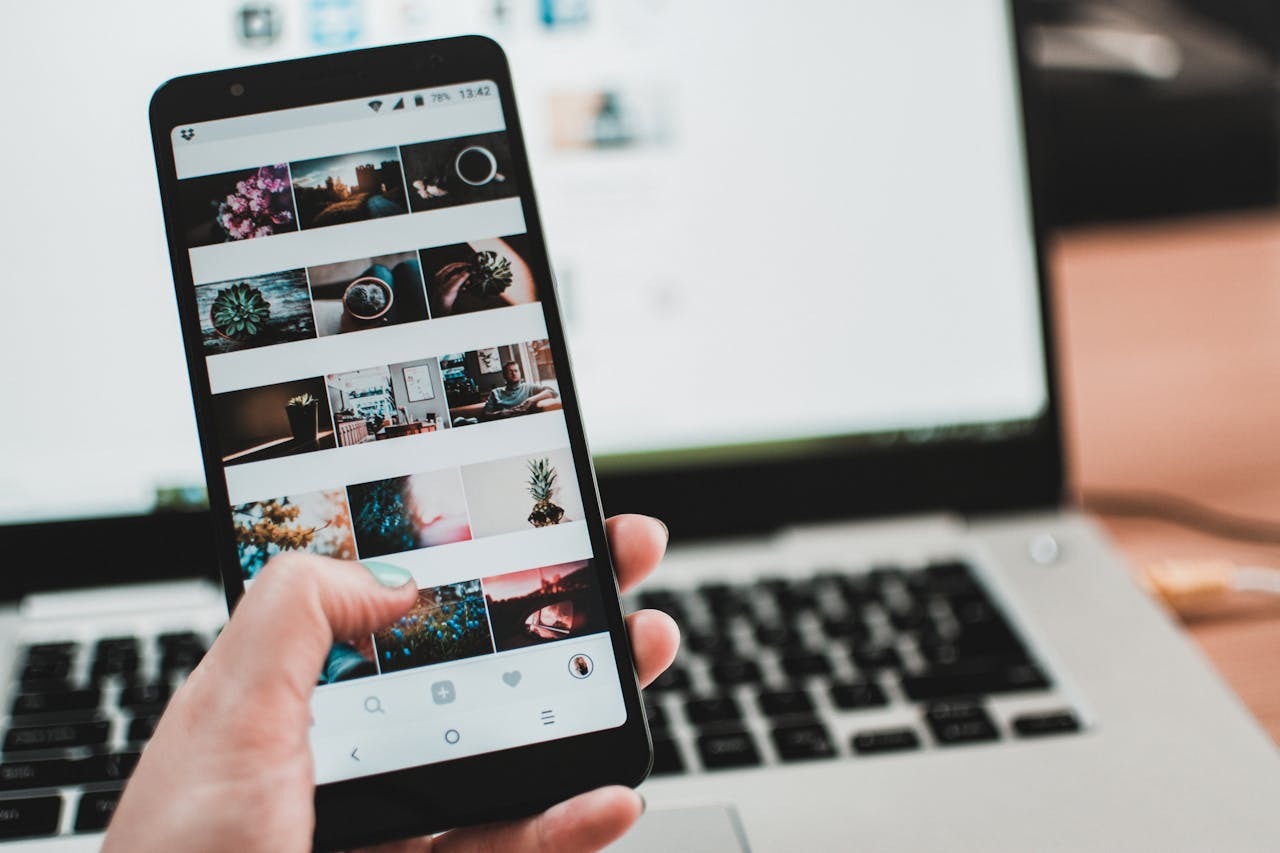
For the first time in human history, we carry an infinite well of stimulation in our pockets. There is no “end” to the feed. No finish line. No completion point. The human brain wasn’t built for this.
Today?
You can scroll through 200–400 pieces of content in just a few minutes.
Each item triggers a tiny dopamine release. Not enough to satisfy — just enough to keep you wanting more.
This creates a cycle of:
Anticipation → stimulation → letdown → craving → repeat
This is the same pattern present in gambling addiction, compulsive shopping, and drug-seeking behavior. The mechanism is identical: unpredictable rewards delivered at inconsistent intervals.

Your phone is not just offering content. It is offering dopamine on demand.
Why More Leaves Us Empty: The Brain’s Diminishing Returns
Content overload leads to what neuroscientists call “reward pathway blunting.” When the brain is overstimulated:
Dopamine receptors become less sensitive.
Pleasure becomes harder to achieve.
Boredom becomes intolerable.
Simple joys feel “flat.”
Real life feels too slow, too quiet, too boring.
This is why a person can binge four hours of TikTok or YouTube and then say, “But I don’t feel any better.” Or why a kid can be told “go outside and play” and respond with “there’s nothing to do.”
Their dopamine receptors have been training under high-speed, high-intensity, sugar-rush conditions. And real life can’t compete with that.
But here’s the greater danger: When the heart is exhausted but unsatisfied, it becomes vulnerable to sin, escapism, and deeper emotional instability. The mind becomes restless. The soul becomes numb.
This is exactly what Proverbs 27:20 was describing: “Never satisfied are the eyes of man.” In other words, the human heart left to itself will always crave more — but never find what it’s looking for.
Why Consumption Feels Spiritual (But Isn’t)
People often turn to digital content when they feel:
stressed
bored
lonely
anxious
overwhelmed
purposeless
sad
spiritually dry
But this is relief without restoration. It is escape without healing. It is numbness disguised as rest.
Biblically, this is extremely significant. The prophets consistently warn against false wells — places people go to feel temporarily better while avoiding true spiritual renewal.
Jeremiah 2:13 says:
“My people have committed two evils:they have forsaken Me, the fountain of living waters,and hewn out cisterns for themselves,broken cisterns that can hold no water.”
A “broken cistern” is something you pour into endlessly but it never fills. That is what endless digital consumption is.
It feels like rest. But it cannot satisfy. It cannot restore. It cannot quiet the soul. Because it is a broken cistern, not a fountain.
The Spiritual Cost of Content Overload
Most Christians today do not reject prayer, Scripture, worship, or fellowship because they hate spiritual things — they simply can’t sit still long enough to experience them.
Content overload produces:
• A restless mind
You want to read Scripture, but your brain keeps reaching for stimulation.
• A distracted heart
You try to pray, and your thoughts scatter like leaves in the wind.
• A shallow spiritual life
• A constant sense of “something’s missing”
This is spiritual hunger being numbed — not fed.
In other words:
The psalmist says: “Be still, and know that I am God.” (Psalm 46:10) But stillness feels like suffering to a heart addicted to noise. This is one of the greatest spiritual crises of our generation:
Scripture’s Diagnosis: Misplaced Desires
Jesus spoke often about desire, hunger, and thirst. He never condemned desire itself — He redirected it.
“Blessed are those who hunger and thirst for righteousness,for they shall be satisfied.” (Matthew 5:6)
In other words: Fulfillment isn’t found in “more.” Fulfillment is found in the right “more.”
Augustine famously said:
“Our hearts are restless until they find their rest in You.”
Technology didn’t create the restless heart. It simply gave it infinite ways to be restless. Scripture insists that:
craving will never end,
eyes will never be satisfied,
hearts will never be full,
until they find their fulfillment in Christ.
This is why digital overload isn’t just a mental problem — it’s a discipleship problem.
When “Just One More” Becomes a Lifestyle
The brain loves patterns. So does the heart.
When someone spends years training the mind to expect constant novelty, they develop:
chronic dissatisfaction
difficulty enjoying normal life
dependence on stimulation
inability to sit in silence
lowered emotional resilience
weakened attention
increased anxiety
Over time, this becomes lifestyle-level spiritual drift. You don’t wake up one day suddenly disconnected from God — you slowly drift into distraction, noise, and overstimulation until spiritual hunger becomes spiritual apathy.
This is why more digital rest, healthier rhythms, and tech sabbaths aren’t optional luxuries. They are spiritual survival practices.
The Gospel’s Answer to Endless Craving
The Bible never promises that God will remove all desires. Instead, it promises a new heart with new desires.
“Delight yourself in the Lord,and He will give you the desires of your heart.” (Psalm 37:4)
The gospel doesn’t say, “Stop wanting things.” It says, “Want the right things — and you will finally be fulfilled.”
Christ does what no amount of content ever can:
He satisfies the soul.
He gives rest to the weary.
He fills what the world leaves empty.
He meets the deepest needs of the human heart.
Psalm 16:11 describes the opposite of endless scrolling:
“In Your presence there is fullness of joy,at Your right hand are pleasures forevermore.”
This is the antidote to a restless, overstimulated, digitally exhausted generation.
Conclusion: Only Christ Can Satisfy the Restless Eye
Technology is not the villain — but it is a powerful mirror. It reveals the restlessness already inside us. And it amplifies it.
This is the only path to peace in a world drowning in stimulation.
This is the First post in an Eight Part Series entitled Faith and Focus: Following Jesus in an Age of Distraction. Please be sure to get the whole story by reading each post. I pray they are an encouragement to you.
Post 1: The Attention Crisis Nobody's Talking About
Post 2: The Dopamine Generation: How Our Phones Hijack the Reward System
Post 3: The Selfie Paradox: Identity in the Age of Comparison
Post 4: Gaming, Screens, and the Adrenaline Trap
Post 5 The Eyes of Man Are Never Satisfied: Content Overload and Spiritual Emptiness
Post 6: Rewiring the Heart: The Gospel's Answer to a Distracted Age
Post 7: Beholding and Becoming: The Theology of Attention
Post 8: Renewing the Mind: A Practical Path Toward Digital Discipleship
Check back weekly for the next post.
Reference source list:
Neuroscience & Reward Pathways
Volkow, N.D., et al. “The Neuroscience of Digital Addiction.” Nature Reviews Neuroscience, 2019.
Montag, C., & Reuter, M. Internet Addiction and the Brain: A Review. International Journal of Mental Health and Addiction, 2017.
Przybylski, A., & Weinstein, N. “A Large-Scale Test of the Goldilocks Hypothesis: Quantifying the Nonlinear Relationship Between Digital-Screen Use and Adolescent Wellbeing.” Psychological Science, 2017.
Heffernan, M. “The Impact of High-Stimulation Media on Emotional Self-Regulation.” Neuroscience & Biobehavioral Reviews, 2020.
Attention, Overload & Cognitive Fatigue
Ophir, E., Nass, C., & Wagner, A.D. “Cognitive Control in Media Multitaskers.” PNAS, 2009.
Swing, E.L., et al. “Television and Video Game Exposure and the Development of Attention Problems.” Pediatrics, 2010.
Christakis, D.A. “Interactive Media and Attention Span Development in Children.” JAMA Pediatrics, 2018.
Radesky, J., et al. “Digital Media and Symptoms Mimicking ADHD.” Pediatrics, 2016.
Social Media, Self-Worth & Emotional Impact
Twenge, J.M. iGen: Why Today’s Super-Connected Kids Are Growing Up Less Rebellious, More Tolerant, Less Happy — and Completely Unprepared for Adulthood. Atria Books, 2017.
Turkle, Sherry. Reclaiming Conversation: The Power of Talk in a Digital Age. Penguin Press, 2015.
Lin, L.Y., et al. “Association Between Social Media Use and Depression Among U.S. Young Adults.” Depression and Anxiety, 2016.
Barna Group. “Gen Z: Identity, Community, and Technology.” 2019 Report.
Biblical & Pastoral Context
Augustine. Confessions. Translated 2006.
Psalm 46:10 — Be still, and know that I am God.
Psalm 16:11 — In Your presence there is fullness of joy…
Matthew 5:6 — Blessed are those who hunger and thirst for righteousness, for they shall be satisfied.
Jeremiah 2:13 — They have forsaken Me, the fountain of living waters, and hewed out cisterns for themselves…
Digital Fatigue & Emotional Numbing
Lemola, S., et al. “Contingent Tech Rewards and Emotional Dysregulation in Adolescents.” Child Development, 2015.
Heffernan, M. “Digital Overload: Consequences for Cognitive and Emotional Wellbeing.” Neuroscience & Biobehavioral Reviews, 2020.
Nature News. “Scrolling Through Online Videos Increases Feelings of Boredom.” 2024.
MindAlchemy Mental Health. “How Social Media Affects Your Brain.” 2023.