
How overstimulation in gaming and entertainment affects emotional regulation.
Introduction: A New Kind of Playground
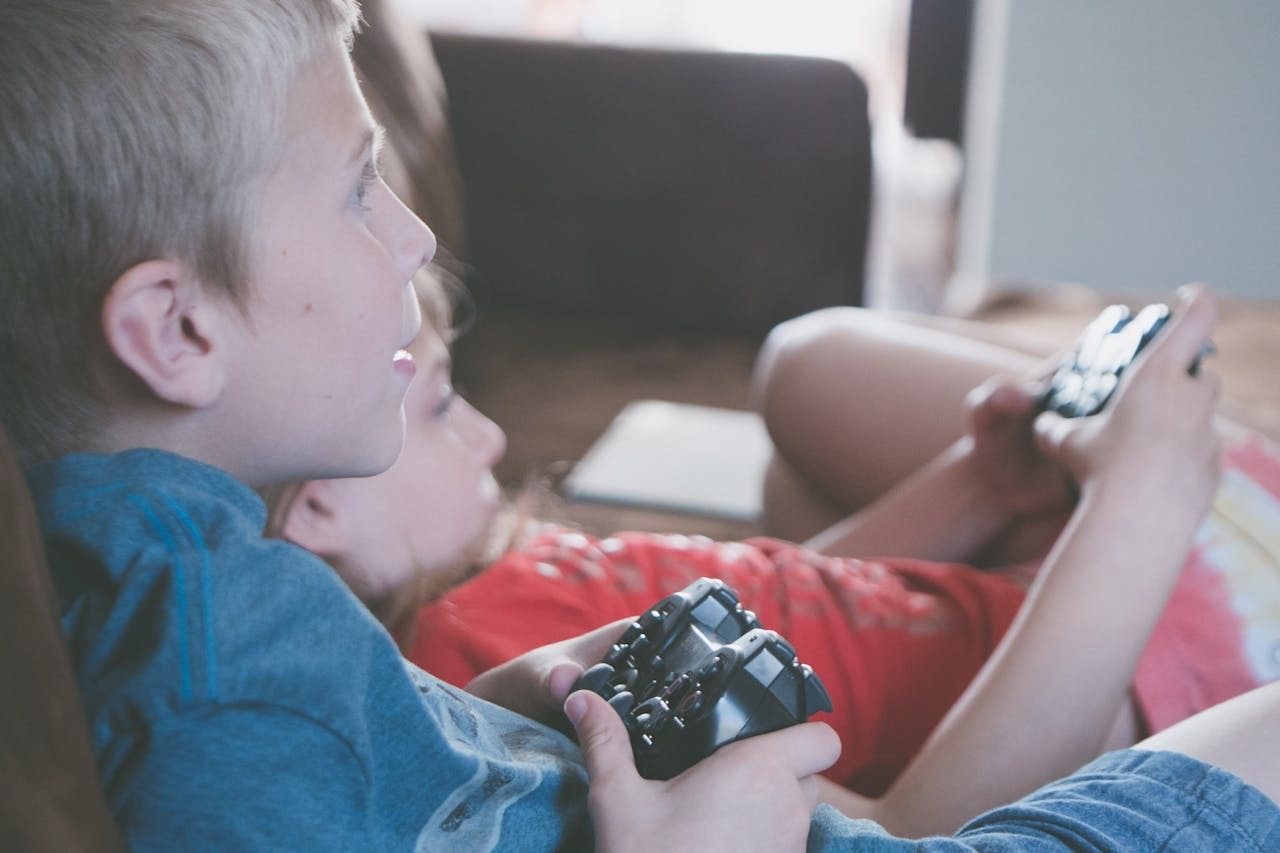
For the first time in human history, children’s primary “playground” isn’t outside, in the woods, or with friends—it’s digital. Platforms like Minecraft, Fortnite, Roblox, and countless others now occupy the majority of recreational time for millions.
- Is it addictive?
- Should we be worried?
- Is it destroying attention spans?
- Or is it simply the new normal?
One thing is certain: games today aren’t like the games we grew up with. They are engineered—intentionally—to capture the brain’s reward systems, stimulate emotional survival centers, and keep players coming back.
This post isn’t a crusade against games. Games can be creative, social, skill-building, and even redemptive. Instead, this is about understanding what modern gaming does neurologically and spiritually, so we can shepherd hearts wisely.
The Neuroscience: Why Today’s Games Are More Addictive
Modern games—especially Fortnite and Minecraft—run on a fundamentally different neurological model. They use:
infinite progression
social reward systems
bright color palettes crafted for stimulation
variable-ratio reward loops
no definitive ending
This creates what neuroscientists call a high-arousal feedback cycle. Here’s what that means.
Minecraft: Cognitive Engagement + Endless Goals
Minecraft stimulates the prefrontal cortex (planning, creativity) but also creates a constant “just one more” mentality. The tasks never end. The dopamine cycles do not conclude. And the autonomy of the sandbox world produces a neurological “flow state” that is very hard to exit.
Fortnite: High Stimulation + High Stress + High Reward
Fortnite is a perfect storm:
fast-paced competition
bright and animated visuals
unpredictable outcomes
a massive social ecosystem
cosmetic rewards
constant updates
This activates the amygdala (emotion + threat processing) alongside the striatum (reward seeking). The brain experiences both stress (survive the battle) and reward (win the battle or level up), creating an intense emotional pairing.
Researchers point out that games like Fortnite create “emotional oscillation loops,” swinging the brain rapidly between excitement, threat, reward, and relief—which teaches the brain to crave the next loop.
Amygdala Hijack: How Games Train the Emotional Brain
The amygdala is the part of the brain responsible for:
emotional responses
fear
threat detection
impulsivity
fight-or-flight
quick reactions
The “Always Threatened” Brain
In Fortnite, danger can appear instantly from every angle. This keeps the amygdala hyper-alert. Over time:
stress responses increase
patience decreases
tolerance for boredom disappears
emotional self-regulation weakens
attention fragments
real-life responsibilities feel “slow,” “boring,” or “not worth it”
Studies show that high-intensity gaming desensitizes the amygdala to normal emotional cues while hypersensitizing it to digital threats and rewards.
This causes children to:
get irritated easily
have big emotional outbursts
feel frustrated with normal tasks
struggle to stay calm without stimulation
In other words, the emotional brain becomes shaped by the game.

The ADD / ADHD Misdiagnosis Problem
This is a major issue—and one the church needs to talk about compassionately and truthfully. Many parents assume their child suddenly “developed” ADHD. But in a large number of cases, kids are showing symptoms because their brains have adapted to constant stimulationand now struggle with:
slow tasks
uninteresting material
stillness
delayed rewards
normal conversation
chores
reading
homework
Take away the game, and they appear:
inattentive
restless
impulsive
distracted
forgetful
grey matter (thinking, self-control, emotional regulation)
white matter (communication pathways in the brain)
Many studies are now showing grey matter volume decreases in the prefrontal cortex when excessive screen time displaces real-world tasks. This is not “screen panic.” It is documented brain adaptation. And thank God—brain plasticity means recovery is possible. But it requires intentional training.
The Spiritual Formation Problem: Worlds Without God
Games like Minecraft and Fortnite create immersive worlds—worlds where:
you build your own universe
you create your own rules
you determine your identity
you conquer your enemies
you accumulate glory, power, and wealth
you choose what matters
you face no consequences
you respawn when you fail
The world becomes self-centered. The self becomes sovereign. This is important to note as it is not merely psychological—it is theological.
Digital worlds teach:
autonomy without accountability
progress without purpose
self-expression without truth
achievement without humility
conflict without reconciliation
identity without God
The human soul is meant to learn through limitation, community, delayed gratification, and obedience. But digital worlds reshape spiritual formation:
Gaming Forms the Heart in These Ways:
Impatience. Real life feels slow.
Entitlement. If something is hard, it’s “not fun.”
Isolation. Community becomes anonymous or superficial.
Self-Focus. Success and identity are crafted, not received.
Control. Life becomes “my world, my rules.”
This stands in stark contrast to biblical discipleship: “Deny yourself, take up your cross, and follow Me.” — Matthew 16:24
How Games Shape Identity, Belonging, and Purpose
One reason gaming is so powerful is because it offers something the human heart craves:
belonging
mastery
identity
achievement
a role to play
a mission
Identity:
Belonging:
Achievement:
Purpose:
Kids are not addicted to a screen—they’re addicted to a sense of meaning they do not experience elsewhere.

Biblical Reflection: Real Battle, Real Identity, Real Purpose
The Bible does not condemn games—but it speaks clearly about:
how we use our time (Ephesians 5:15–16)
what shapes our minds (Romans 12:2)
what rules our hearts (Proverbs 4:23)
how we form identity (Colossians 3:1–4)
the danger of idols (1 John 5:21)
Gaming becomes dangerous when it becomes:
a refuge instead of God
a source of identity instead of Christ
a place of escape from real life
a substitute for real responsibilities
the main source of dopamine, joy, or purpose
God offers something better than any digital world:
Identity:
“You are God’s workmanship.” (Ephesians 2:10)
Belonging:
“You are a people for His own possession.” (1 Peter 2:9)
Mission:
“Go and make disciples…” (Matthew 28:19)
Healing the Gaming Brain: Practical, Grace-Filled Steps
We don’t just want diagnosis—we want discipleship.
Here are practical steps that bring balance, not shame:
1. Introduce Weekly “Sabbath Play”
2. Use E-Ink Devices Where Possible
3. Set Game Curfews, Not Just Game Limits
4. Replace Digital Community with Real Community
Youth group, sports, church events, family time—children need embodied belonging.
5. Practice “Challenge-Based Parenting”
6. Talk About Heart Issues, Not Just Screen Rules
Ask:
What do you feel when you play?
What do you feel when you stop?
What does the game give you that life doesn’tWhat do you wish were different in real life?
How can we grow together?
7. Point Them to the Real Story They Were Made For
Conclusion: Reclaiming the Hearts of a Gaming Generation
Gaming is not evil. But it is powerful.
And the goal of Christian parents and pastors is not to create tech-free kids, but Christ-filled kids:
kids who can enjoy digital worlds without escaping into them
kids who find identity in Jesus, not in avatars
kids who know real community
kids whose emotional brains are regulated
kids whose attention is anchored
kids who see technology as a tool, not a master
“He who began a good work in you will be faithful to complete it.”— Philippians 1:6
This is the First post in an Eight Part Series entitled Faith and Focus: Following Jesus in an Age of Distraction. Please be sure to get the whole story by reading each post. I pray they are an encouragement to you.
Post 1: The Attention Crisis Nobody's Talking About
Post 2: The Dopamine Generation: How Our Phones Hijack the Reward System
Post 3: The Selfie Paradox: Identity in the Age of Comparison
Post 4: Gaming, Screens, and the Adrenaline Trap
Post 5 The Eyes of Man Are Never Satisfied: Content Overload and Spiritual Emptiness
Post 6: Rewiring the Heart: The Gospel's Answer to a Distracted Age
Post 7: Beholding and Becoming: The Theology of Attention
Post 8: Renewing the Mind: A Practical Path Toward Digital Discipleship
Check back weekly for the next post.
Reference source list:
Neuroscience, Addiction, and Screen-Time Research
1. American Psychological Association (APA).
“Video Game Addiction: Cognitive, Emotional, and Behavioral Aspects.” APA Monitor, 2019.
2. Kühn, S., & Gallinat, J.
“Brain Structure and Functional Connectivity Associated With Video Gaming.”
Molecular Psychiatry, 2014.
3. Dong, G., et al.
“Cognitive Control in Internet Gaming Disorder: A Functional MRI Study.”
Biological Psychiatry, 2012.
4. Yao, Y., et al.
“Grey Matter Reductions in Internet Gaming Disorder.”
Addictive Behaviors, 2017.
5. Przybylski, A., Weinstein, N.
“A Large-Scale Test of the Goldilocks Hypothesis: Quantifying the Nonlinear Relationship Between Digital-Screen Use and Adolescent Wellbeing.”
Psychological Science, 2017.
6. Horvath, J., et al.
“Effects of Video Games on the Brain: A Review.”
Frontiers in Human Neuroscience, 2018.
Minecraft, Fortnite, and Reward-System Effects
7. Spence, I., et al.
“Minecraft Builds Creativity and Problem Solving.”
Computers & Education, 2020.
8. Ventura, M., et al.
“Video Game Training Enhances Cognitive Control in Children.”
Developmental Psychology, 2013.
9. Harvard Medical School — Harvard Health Publishing.
“How Video Games Affect the Brain.” Updated 2022.
10. Andrews, A., & Murphy, A.
“Fortnite and Adolescent Reward Sensitivity: Neurobiological Implications.”
Journal of Adolescent Health, 2021.
11. Bailey, K., et al.
“Action Video Games Shape the Emotional Brain: Amygdala Responses During Stimulus Evaluation.”
Cognitive, Affective, & Behavioral Neuroscience, 2010.
Amygdala, Stress-Response, and Emotional Regulation
12. Telzer, E., et al.
“Online Social Reward, Stress Regulation, and Adolescent Risk Behavior.”
Social Cognitive and Affective Neuroscience, 2015.
13. Lemola, S., et al.
“Contingent Tech Rewards and Emotional Dysregulation in Adolescents.”
Child Development, 2015.
14. Montag, C., & Reuter, M.
“Internet Addiction and the Brain: A Review.”
International Journal of Mental Health and Addiction, 2017.
ADHD vs. Tech-Induced Dysregulation
15. Christakis, D. A.
“Interactive Media and Attention Span Development in Children.”
JAMA Pediatrics, 2018.
16. Radesky, J., et al.
“Digital Media and Symptoms Mimicking ADHD.”
Pediatrics, 2016.
17. Swing, E. L., et al.
“Television and Video Game Exposure and the Development of Attention Problems.”
Pediatrics, 2010.
18. National Institute of Mental Health (NIMH).
“Attention-Deficit/Hyperactivity Disorder and Environmental Factors Affecting Attention.” Updated 2021.
Identity, Belonging, and Discipleship
19. Turkle, Sherry.
Reclaiming Conversation: The Power of Talk in a Digital Age.
Penguin Press, 2015.
20. Barna Group.
“Gen Z: Identity, Community, and Technology.” Barna Report, 2019.
21. Crouch, Andy.
The Tech-Wise Family.
Baker Publishing, 2017.
22. Smith, James K. A.
You Are What You Love: The Spiritual Power of Habit.
Brazos Press, 2016.
General Screen-Time Physiology
23. Heffernan, M.
“The Impact of High Stimulation Media on Emotional Self-Regulation.”
Neuroscience & Biobehavioral Reviews, 2020.
24. Ophir, E., et al.
“Cognitive Control in Media Multitaskers.”
PNAS, 2009.
25. World Health Organization (WHO).
“Gaming Disorder Classification.”
International Classification of Diseases (ICD-11), 2019.